Deerfield's Day of Giving is tomorrow (Thursday, Feb 27)! There are over 100 of us who have not supported DA with a gift this fiscal year. If you do it tomorrow - it gets matched dollar for dollar!
Click here to support Deerfield! Or watch the video first THEN do it!
President Speaks: 7 ways to build a better career launchpad for low-income students
Entering the workforce can be more challenging for disadvantaged students than their higher-income peers. Here's how one university is narrowing the gap.
Adam Weinberg is the president of Denison University in Granville, Ohio. Laurel Kennedy is the vice president for student development.
Our mission as college educators is to bring together capable students from a wide variety of backgrounds and equip them with knowledge and skills they need to achieve personal, professional and civic success.
However, the post-graduation experience is not always as successful as we wish, especially for first-generation students from low-income backgrounds. National data underscores that, despite their college degrees, this group of students faces a variety of obstacles that slow their professional attainment.
Our free newsletter will bring you the latest news & trends in higher education. From policy and regulation issues to education tech, we'll deliver the intel you need to know.
At Denison, we have been tracking the career outcomes of our students in a highly granular way for the last seven years. During this period, we have conducted surveys, interviews and focus groups to understand our students' early career transitions, points of career acceleration and the barriers to career launch they have encountered.
What we have learned may be helpful to other institutions that share our commitment to early, positive career outcomes for all students. We know there are clear differences in career paths for more well-off students versus their lower-income and first-generation college peers. As we work to narrow that gap, these strategies are making a difference.
Seek students' help in demystifying career development. We have discovered that many university resources are promoted in language that is coded and inaccessible, or that appears only at the end of a web-search trail that few students will complete. We hired students to review our website and help us identify the sections that were unclear, incomplete or unnecessarily daunting. Students are helping us put helpful information in their paths in ways that make sense to them. For instance, we have a lot of financial support available for students in their career development journey but it wasn't very well spelled out on the website or in written materials provided in every introductory appointment. Students advised that information needed to be provided much more explicitly for them to take advantage of it.
Adam Weinberg is the president of Denison University. |
Credit: Denison University
Remove requirements of self-disclosure.We learned through focus groups with first-generation students that if resources weren't put on the table, many would simply assume they were not available. Few would risk the discomfort of asking for assistance unless they were sure it was available and that they were eligible. In all introductory coaching appointments, we now make sure that resources are made visible and accessible — from paid internships to grants for test preparation to covering interview travel.
Address cultural shifting head-on.Our students shared candidly that it was not until they arrived at a university with many wealthy students that some first experienced the full force of their social and economic marginalization. This created an ambivalence that students found difficult to process. Talking with alumni, advisors and professional mentors who had previously navigated these tensions helped students feel less isolated and overwhelmed. The same is true for faculty who work closely with this group of students and hence have their trust. We now ask alumni, faculty and others to surface and speak candidly about these concerns, to the extent they are comfortable, as they talk with students.
Be sensitive to well-intended interactions that dismiss concerns. Faculty advisors, career coaches and mentors often want to reassure young people about their career prospects. Our students told us that even the best intended "Don't worry!" can have a particularly silencing effect on an economically disadvantaged student who is worried and would benefit from talking through what is on her mind.
Laurel Kennedy is the vice president for student development at Denison University. |
Credit: Denison University
Articulate low-income and first-generation graduates' skill sets. The Association of American Colleges and Universities has done extensive research into the skills and capacities employers most need. The attributes they've identified align with first-generation and low-income students in particular. Among these are the ability to be creative, resourceful and perseverant in problem-solving, to work well in diverse teams and to navigate new settings proficiently. We are working with students to help them articulate these strengths in the interview process, and we are drawing the attention of faculty and staff to the benefits of these attributes as they prepare reference letters. We are also highlighting these traits in conversations with recruiters and internship providers, reminding them of how important — and unusual — these qualities can be in young professionals.
Value equally the benefits of internships and jobs. Internships offer great value but they don't always pay (or pay well enough) to meet the income requirements of students responsible for their own expenses. So we are maximizing the benefits of on-campus employment by training campus employers to work formatively on professional skill sets. Our career center led the development of a campus employer's toolkit offering information on mentorship within the context of supervision and performance evaluation, advice on professional etiquette and tips for helping students learn skills such as writing professional emails. This scaffolding of student employment enables many of the benefits of internships to be realized, recognized and articulated through campus work experiences.
Create inclusive networks. The importance of professional networks is well understood. The most powerful networks, however, are often exclusive, based on kinship or status. Low-income and first-generation students rarely have access to these types of networks. We are helping students to understand how networks function and how to use them to find opportunities. Equally important, we are constructing professionally focused networks of alumni and parents that leverage the kinship of the college and the bonds that alumni feel toward each other to assist graduates across class lines.
The first few years out of college are a time of tremendous and rapid change. We have learned that continuing to provide students access to our career resources and networks need not be costly. It also pays dividends in our career development center, as we learn from these young grads and utilize their feedback to improve our programs.
We must all be committed to keep asking questions about how we can better prepare our alumni to succeed in their post-graduate life. The learning never stops.
Leigh Guyer went out all in his recent beer league hockey referee assignment. And broke his right wrist. FB comments included a sympathetic sister who knows he's injured that arm four times now, but only two of those involved her. Jim Wareck noted that this type of injury might have been expected during Leigh's IHL career. Maybe our class orthopedist Johannes Mortier can chime in on the quality of the surgery! Get well soon, Leigh!
Over the 2019 holidays, Schmidt and Knight connected in NYC and paused for a moment near the Lincoln Center fountain for a team photo. With the help of a professional photographer, they expect this photo will remain official until our 50th reunion.
"2020 is going to be a great year for all of us" says Doug Schmidt. We celebrated the notion today with lunch in the big apple. Thanks to Doug and Ben for hosting Hank (Miami) and JK (Denver)!
One of the biggest investments families make is the money they spend on college. Here are nine things college students should do during their school years to help ensure the best return on that investment.
Many parents and students wading through college applications this fall are experiencing sticker shock. Couple that with 44 million Americans owing $1.5 trillion in student loan debt and anyone can see why there are growing concerns about the cost and value of a college education.
But there is consistent and compelling evidence that earning a college degree still remains the best path to improve one’s job prospects. It’s a fact that college graduates earn on average 84% more over their lifetimes than high school graduates.
The question is not whether college is worth it but rather, how do students get the most from their investment, especially with an eye toward building a post-college career?
I believe families need a road map. Let me offer nine essentials for maximizing the return on your tuition dollars:
1. Embrace academic courses.
Whether studying Shakespeare or statistics (or hopefully both), academic work must be the centerpiece of any student’s college experience. It may seem like simple advice, but far too many students take the path of least resistance and/or take classes in one narrow corner of the college. This is the time to be rigorous. Sign up for a wide range of challenging classes and take advantage of being fully engaged in each of them. Find joy and power in the books you read, the classes you attend and the papers you write. This should be priority one.
2. Choose co-curricular activities wisely.
Co-curricular activities, like student organizations, student government, campus newspapers, athletics and arts organizations, offer fun and learning, but students tend to get overly involved or not involved at all. Get involved in something you are already interested in, and stretch yourself by pursuing a new interest. Remember, learning comes to those who value depth, commitment and excellence — not just keeping busy.
3. Make room for cultural and intellectual events.
Lectures, plays, concerts, art openings and panel conversations are just a few of the extraordinary events that fill college campuses. Too many students don’t take advantage of the range of cultural and intellectual events to expand their minds, imagination and world views. In particular, attend events that will challenge your existing opinions and tastes. This will prepare you to excel in the world of work as well.
College should help you develop ideas for the kind of life you want to live, give you an understanding of how careers allow people to build lives and help you acquire the skills, values, habits, networks and experiences to successfully get started post-graduation. Use three of the suggestions above — courses, co-curricular activities, and campus events — to examine unfamiliar topics and identify your interests and passions. Also, visit your career service center early (don’t wait until late in your senior year) and get to know some alumni. They are the ones that may give you jobs later. Seek out internships and other career-related programs. Study abroad for a semester. All of this is critical in the era of globalization.
5. Develop a wide set of friendships.
College campuses represent one of the few places in the country where people are living across class, race, ethnic backgrounds, political ideology and religious views. Proactively seek out friendships across differences. Learning to read cultures and/or work in diverse teams is a 21st century skill across the professions. In class, if someone expresses a view that makes you uncomfortable, ask them out for coffee. Your ability to learn from those who see the world differently and/or resolve conflicts will serve you well in your work life. You’ll be surprised by what may unfold.
6. Take advantage of mentors.
A close relationship with a faculty or staff member is one of the strongest predictors that college will be life-transforming for a student. Find faculty and staff who will provoke and inspire you on a path of personal growth, learning and self-discovery. Don’t view them simply as taskmasters. Connect with those who push your potential. Their recommendations could make the difference early in your career.
7. Cultivate good life habits.
Start with sleep, nutrition and exercise. Then work to build additional habits that will allow you to thrive in college and beyond. Reduce time on social media and spend more face-to-face time with friends. Consider learning some mindfulness techniques, like yoga, meditation and journaling. Many colleges offer classes and students are using apps like Calm, 10% Happier and Headspace. Figure out what keeps you healthy. College is a place to learn the habits to manage and thrive in a busy, competitive and challenging world. And it will make you a more valuable and productive employee or entrepreneur.
8. Learn to fail forward.
Your college experience will have struggles and stumbles. When things don’t go well, it may be easy to believe that everybody else is succeeding while you are not. It’s not true. College is about growing as a person. Failing is a normal, healthy and positive part of growth. Effectively dealing with failure will help prepare you for the inevitable ups and downs of a career. Find faculty, staff members and peers who can help you learn from the experiences. Most of all, try again.
9. Get your hands on tools of the trade.
Lastly, become an expert in the tools of the trade. They will enhance your résumé. If you want to go into finance, learn to work on a Bloomberg Terminal. If you want to go into the health sciences, develop lab skills. Seek out opportunities to learn database design and other industry standard software. Everybody should learn Excel.
Employers tell us that they want well-rounded prospects to hire, people who have demonstrated rigor, have broad experiences and solid coping skills. Parents are constantly told to relax the reins when it comes to college. But you watch and tend to your other investments. Why stop now?
With encouragement and attention to this road map, your college investment will pay the dividends you expect — and deserve.
Adam Weinberg is the 20th president of Denison University. He previously served as president and CEO of World Learning, one of the premier international education, exchange and development organizations, and as vice president and dean of the college at Colgate University, where he was a member of the sociology department for more than a decade.
Mark Thomas Laflamme, age 54, passed away peacefully surrounded by loved ones on Thursday, October 24, 2019, in his home in Palo Alto. He was born on December 30, 1964, in Summit, New Jersey to Joseph Marcel Louis and Mary Ann (Blythe) Laflamme. He married his love, Bonnie Um, in 2008.
Mark spent most of his early life in Saudi Arabia, where his father worked in the energy industry. For high school, he attended Deerfield Academy in Massachusetts. He then graduated from Tulane University in New Orleans. Mark developed an appreciation for myriad cultures and had a wonderful ability to get along with others. After college, he worked in investment management at two storied firms – Moore Capital Management and Caxton Associates. He was hired by Ziff Brothers Investments to start up their operations in Hong Kong and then moved to Palo Alto, California where he and some colleagues started Crescent Park Management. Mark had a reputation for expertise in a wide range of investing fields and was known for his kind and friendly demeanor.
Mark brought a quiet determination to everything he did. While gaining increasing responsibilities in complex roles in finance, he found time to run ultramarathons, travel extensively, and raise a family.
Mark will forever be remembered by his wife and best friend, Bonnie, and their precious son, Hunter, by his mother, Mary Ann, and brother, Matthew, and by Bonnie's parents, Jun and Chung Um, and sister and brother-in-law, Margaret and Andre Clark.
A Funeral Mass will be celebrated in memory of Mark on Saturday, November 2, 2019 at 10 a.m. at Our Lady of the Rosary Church, 3233 Cowper Street, Palo Alto. A Rosary will be held at 9:30 a.m.
In lieu of flowers, you may make contributions to the UCSF Cancer Center in Mark’s memory. Please direct your donation to the Gastrointestinal Cancer program: https://campaign.ucsf.edu/opportunities/cancer
Ed Note: Mark shared his health struggle with your editor in September of 2016 and always meant to tell the class, I think. I encouraged him to write a post but it just never happened.
Let's not forget some of our W MA residents! Pics from Facebook - looks like Beaubien ran a race and Nate Nourse made friends with a Minuteman at a UMass hockey game...
Denison President Adam Weinberg clearly thinks about the role of education in the world. Here's his interesting take on how a "shareholder" focus in business is morphing into a "stakeholder" focus and what that means for colleges and universities. Well done Adam!
New Denison University parent Doug Cruikshank watched the induction ceremony from home but sent along this snippet of classmate and Denison President, Dr. Adam Weinberg, doing his thing! The blog is aware of another classmate who has a child at Denison (also a new freshperson) but is awaiting visual evidence...
Family pediatrician of 25+ years, Andrew Nash (aka "Drew" or "Elmo" back in the day), has started a podcast, aptly named The Owner's Manual! Besides being great to hear his smooth tones, he knows his stuff! Check it out at https://theownersmanual.podbean.com/
Times of stress and doubt are often reversed with the actions of a helper. Even Mr. Rogers knew that.
35 years ago, the 19-year-old boy at the far left in the first photo was stopped on suspicion of DWI at 1:30 on a Tuesday afternoon in Dallas. That seminal event proved to be a springboard towards an entirely different chapter of life that has spanned 34+ years of evolving recovery and a measure of maturation ... I’m pleased to announce that I have recently launched a private coaching/mentoring practice, building upon the work I’ve been doing with individuals referred to me by client schools like Deerfield, Mercersburg and others.
The man in the bottom photo will be pleased to leverage his accumulated training and related life experience to help adolescents and adults access innate sources of wisdom and help guide them into more placid waters. Particular expertise in abuse and addiction recovery, self-esteem/self-worth issues and issues related to the boarding-school experience. Referrals appreciated and welcomed. For more info, contact me at 804-402-0050 or whit.sheppard@comcast.net
John Knight reports he has finally rejoined the workforce as Alumni Engagement Coordinator for the University of Denver's Daniels College of Business. He's psyched to be back on a campus and happy to be working on engaging more alumni of the Rocky Mountains' leading biz school.
Congratulations to Jeff Spadafora for the early success of his new venture: The Way. (https://www.theway2life.org/). Jeff is delivering individual and group coaching and male bonding in Christian fellowship in Colorado. Delivering purpose and joy, one soul at a time...
Meet Jeff Spadafora, founder of The Way
“The Way is not a program or an ‘academy.’ It’s a multitude of small groups of men doing life together, battling for one another, cherishing one another’s dreams, and making a mark in the world for the Glory of God.”
— JEFF SPADAFORA
Jeff Spadafora is a former management consultant and leadership development expert for Fortune 1000 companies. In 2005, God led him to repurpose his time, talent and treasure toward helping successful people in mid-life transition discover and engage in their second half calling. He did this as a part of the leadership team at the Halftime Institute where he was the Director of Life Purpose Curricula that was used by thousands of people. He was also Director of Global Coaching Services and trained 41 Halftime Institute-certified coaches in 6 countries.
As a result of training Halftime coaches, directly coaching 100’s of successful Christians one-on-one, and speaking and facilitating workshops globally, he wrote The Joy Modelto provide a blueprint for people to live with peace, purpose, courage, character and freedom.
In 2018, on an extended sabbatical along the Mediterranean coast of Spain, the Holy Spirit guided Jeff back to the fundamentals of discipleship. To double-down on being a life-on-life disciple maker and not an organization builder. To help men break through any and all barriers preventing them to live and love like Christ. To grow in this direction with others, locally, over time.
If you're ready to take the next step in your personal, professional and faith life, then join one of The Way small group communities and let the adventure begin.
An impressive effort by Jim Wareck (from LA) and Brian Steward (from San Antonio) to chaperone Brian's daughter Grace at her latest visit to the San Diego Zoo!!! Well done! (Mom Hannah was always nearby, of course...)
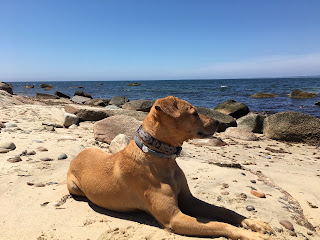
Whit Sheppard is getting in his miles on the Vineyard this summer (near W. Tisbury) until mid-September and welcomes outreach from any classmates nearby. On island phone is 508-693-0579. There's scenery and a furry companion as well!
"The results are in: We’re thrilled to report that thanks to the generosity of nearly 4,500 donors, Deerfield reached 45.1% alumni participation overall, the highest among our peer schools for the third time in the last four years!
Thank you for your part in this meaningful achievement. We’re fortunate to have so many dedicated alumni in our community, who truly “bleed green.” An alumnus suggested that it’s Deerfield’s continued commitment to sit-down meals that makes the difference in our participation—and that’s just one of the traditions that keep us strong.
Your class finished at 46% participation, a great result for a non-reunion year. Congrats!" From Doug and JK: Thanks so much to the 58 classmates who made the time to make a gift to DA and to join this stellar effort. We added some new donors this year and we're grateful for your vote of support for our work and for the Deerfield Experience! Keep in touch!!!
(Pilfered from FB) Happy birthday American ingenuity.
A little-remembered fact is the astronauts landed July 20th but stepped out onto the lunar surface on the 21st. And the Soviets were literally a few steps behind us in a robotic mission. And NASA’s triumph had more to do with trust, perseverance and grit than with the technology behind the Apollo missions.
Have you ever gotten into a new project and realized your initial assumptions about the effort were incorrect? That it would be harder than you thought? Or, seemingly impossible? This has been a pattern in my own life. Watching Man land on the moon at age four set a pattern in my life, to reach for long-shot goals. Like trying to save the planet from irreversible environmental change and severe weather disasters. I found motivation by getting into technical challenges far over my head, and then fighting my way out of the proverbial maze.
Over the past decade I and my team have had the privilege to work with NASA-funded scientists on the DC8 research aircraft. We explored ocean storms and compared our in-situ XDD dropsondes against new ‘brassboard’ hardware prototypes. These payloads Doppler and Differential Absorption lidar and microwave passive remote sensors that NASA will hopefully soon fly aboard advanced weather satellites.
What I did not anticipate was two items: First, how NASA’s corporate culture demands ever-higher levels of performance. And second, I was competing against non-profit academic institutions that did not need a profit to fund their continued technical progress.
This past April I flew the equivalent of a couple times around the earth with a near-perfect 94% record of XDD soundings. And we successfully underflew a new European Space Agency satellite ‘Aeolus’ several times. Aeolus, flying above us at over ten times our flight speed, had a Doppler wind lidar. This allowed NASA to inter-compare the onboard DAWN wind lidar and in-situ XDD dropsonde wind measurements taken from the DC8.
But it was not enough. This year, NASA raised the performance bar even higher. Although six out of our seven measured parameters we were at, or better than state-of-the-art, one measurement was too slow: relative humidity. Our horizontal and vertical wind speed and direction, pressure, temperature and sea surface temperature were unmatched. But another new space remote sensing hardware brassboard prototype called HALO was flying on the DC8. HALO uses a differential resorption light technique to measure vertical profiles of relative humidity. And our XDD’s polymer relative humidity disposable sensor, which has a limited response time, was now competing with a speed of light molecular interaction with water vapor. And guess which method was better?
It did not seem fair that NASA might decide to not use (i.e. purchase) our American-made XDD dropsondes in the future, despite the fact that we had overcome so many other technical obstacles to get to where we are now. It seems to never be enough.
And then I remembered the moon shot. How Neil Armstrong had only a few seconds left of fuel to slow their descent onto the lunar surface. About how unsure NASA was of the rigidity and stability of the lunar surface. About how the powdered lunar soil stuck to everything, including the windows and the astronauts’ nasal cavities after they removed their helmets. They just dealt with it. They carried on, and that led to success. True grit, that.
Life goes on and the sun will rise tomorrow, no matter what we do or what we say. I think it’s time we focus as a society on progress and carry on as a country in a civil fashion. And stopped fighting each other. Instead, let’s go back to the moon. And this time, let’s build a campsite and stay for a while.


 Adam Weinberg is the president of Denison University. |Credit: Denison UniversityRemove requirements of self-disclosure. We learned through focus groups with first-generation students that if resources weren't put on the table, many would simply assume they were not available. Few would risk the discomfort of asking for assistance unless they were sure it was available and that they were eligible. In all introductory coaching appointments, we now make sure that resources are made visible and accessible — from paid internships to grants for test preparation to covering interview travel.
 Laurel Kennedy is the vice president for student development at Denison University. |Credit: Denison UniversityArticulate low-income and first-generation graduates' skill sets. The Association of American Colleges and Universities has done extensive research into the skills and capacities employers most need. The attributes they've identified align with first-generation and low-income students in particular. Among these are the ability to be creative, resourceful and perseverant in problem-solving, to work well in diverse teams and to navigate new settings proficiently. We are working with students to help them articulate these strengths in the interview process, and we are drawing the attention of faculty and staff to the benefits of these attributes as they prepare reference letters. We are also highlighting these traits in conversations with recruiters and internship providers, reminding them of how important — and unusual — these qualities can be in young professionals.